
Capitalization
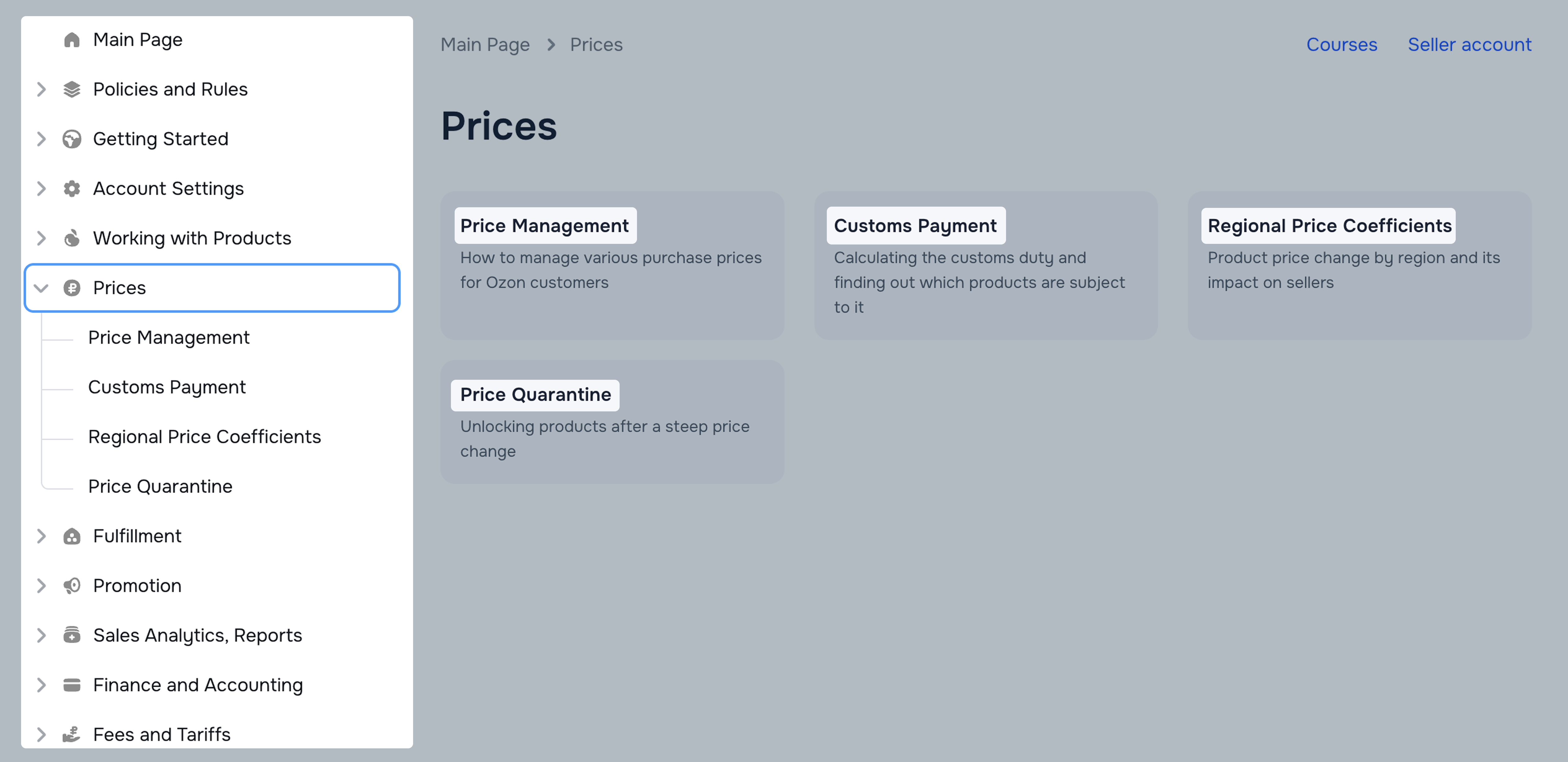
Section and article titles
Use Chicago style title case. Capitalize the first letter of every major word, including nouns, pronouns, adjectives, verbs, and adverbs. Don’t use upper case for minor words like articles, conjunctions, and short prepositions unless they start the title. If a preposition is more than four letters long, capitalize it.
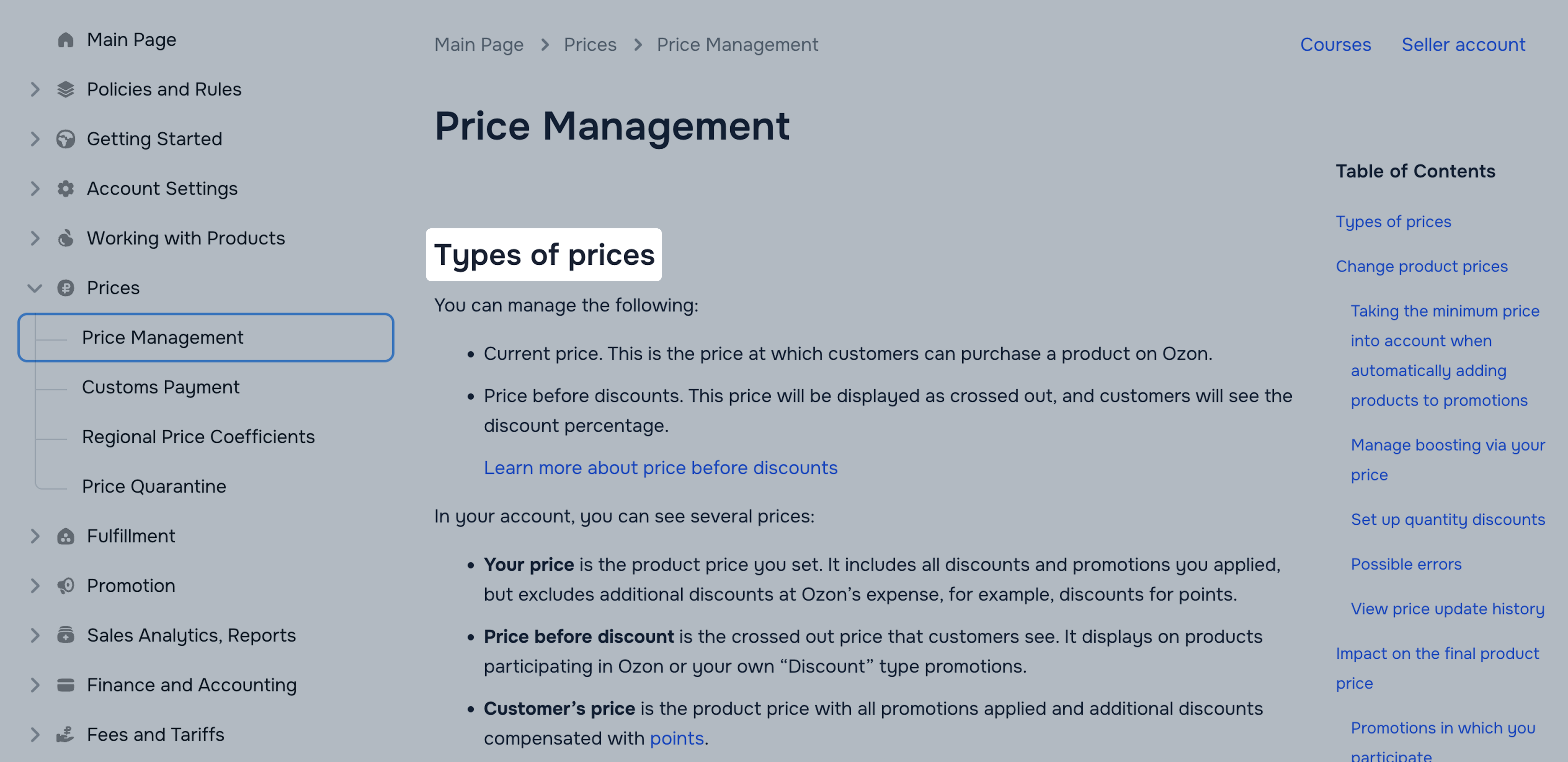
Headings inside articles
Use sentence case: capitalize only the first word of the heading.
Names of UI elements
Capitalize the first letter of UI element names, such as buttons, selectors, or tabs. Use upper case only for the first letter, even if all words are capitalized in the interface.
| ❌ | ✅ |
|---|---|
| open the Product List section | open the Product list section |
| in the Shipping Date field | in the Shipping date field |
Names of special offers, promotions, and tools
When you mention a promotion or tool by its official name, capitalize the first letter and use quotation marks.
| ❌ | ✅ |
|---|---|
| via the Pay-per-Click promotion | via the “Pay-per-click” promotion |
| using the “Pay-per-Order” tool | using the “Pay-per-order” tool |
| the “elastic boosting” promotion | the “Elastic boosting” promotion |
When the phrase is used generically and describes the concept, don’t capitalize it or use quotation marks.
| ❌ | ✅ |
|---|---|
| via “Pay-per-Click” campaigns | via pay-per-click campaigns |
| Manage Elastic Boosting in your account | Manage elastic boosting in your account |
Sentence structure
Mention the circumstance, condition, or goal before the actual action or command. This helps users quickly determine whether the instruction applies to their situation and skip it if it’s irrelevant.
| ❌ | ✅ |
|---|---|
| Use the template to check links for multiple products at once. | To check links for multiple products at once, use the template. |
| You can view the product data in the Analytics → Ratings → Products and prices section. | In the Analytics → Ratings → Products and prices section, you can view the product data. |
| Suggest adding your set to the ready-made sets if you think that other sellers might find it useful. | If you think that other sellers might find your set useful, suggest adding it to the ready-made sets. |
Verb tenses
Present Simple
In step-by-step instructions, use Present Simple for future actions to convey certainty. It describes inevitable outcomes tied to user actions, avoiding any hint of doubt.
| ❌ | ✅ |
|---|---|
| If your product has no sales, we’ll compare its metrics using the same logic. | If your product has no sales, we compare its metrics using the same logic. |
For updates and announcements, use Present Simple. It signals confirmed future events like fixed schedules.
| ❌ | ✅ |
|---|---|
| From October 23, we’ll start an advertising campaign. | From October 23, we start an advertising campaign. |
Past Simple
For describing completed actions or facts, use Past Simple as it clearly states that the event happened and finished.
| ❌ | ✅ |
|---|---|
| Need buyer’s reply: chats for the previous 30 days where a customer hasn’t responded. | Need buyer’s reply: chats for the previous 30 days where a customer didn’t respond. |
You can use other tenses in some cases, but try to avoid them where possible.
Active and passive voice
Use active rather than passive voice to clearly indicate who performs actions and what the reader should do.
| ❌ | ✅ |
|---|---|
| The order will be delivered by the courier at the address that was chosen by you when creating the order. | The courier delivers your order to the address you specify when creating the order. |
| It’s required to upload certificates and pass moderation. | Upload certificates and send the product to moderation. |
Exceptions apply when you highlight the subject itself or when the actor is unimportant or unknown.
| ❌ | ✅ |
|---|---|
| If Ozon partner delivers your order, you can’t try the products on. | If your order is delivered by Ozon partner, you can’t try the products on. |
Attributive nouns
To create concise and readable documentation, use attributive nouns. They function as adjectives and describe other nouns.
The describing noun should generally be singular, even when referring to multiple items.
| ❌ | ✅ |
|---|---|
| You can see the available deliveries methods based on your warehouse address. | You can see the available delivery methods based on your warehouse address. |
To emphasize plurality or avoid ambiguity, use prepositional constructions.
| ❌ | ✅ |
|---|---|
| Adjust the system alert settings. | Adjust the settings for system alerts. |
Avoid strings of more than three attributive nouns. For complex phrases, use both attributive nouns and prepositions.
| ❌ | ✅ |
|---|---|
| The method returns system error message identifier. | The method returns identifier of the system error message. |
Possessive ’s and s’
To show ownership between things or people, prefer attributive nouns over possessive ones.
In long or complex phrases, express possession with “of” to improve readability and avoid ambiguity.
| ❌ | ✅ |
|---|---|
| Сreate a supply request to partner’s warehouse. | Сreate a supply request to partner warehouse. |
| You can’t edit the shipping provider coverage area. | You can’t edit the coverage area of the shipping provider. |
Articles
Omit articles in titles and headings.
| ❌ | ✅ |
|---|---|
| Adding a Product | Adding Products |
| The Brand Documents | Brand Documents |
When you first mention a term, use either the plural form or the singular form with an indefinite article. After that, write it in the singular form with the definite article.
| ❌ | ✅ |
|---|---|
| A PDP should be created manually for few products. | If there are few products, create PDPs manually in your account. |
Contractions
Use common pronoun+verb contractions, for example, it’s, don’t, won’t. Avoid using noun+verb contractions, for example, interface’s.
| ❌ | ✅ |
|---|---|
| You are ready to sell when it is approved. | You’re ready to sell when it’s approved. |
| The PDP’s missing images. | The PDP is missing images. |